Before you book: if the address is a landmark, stop
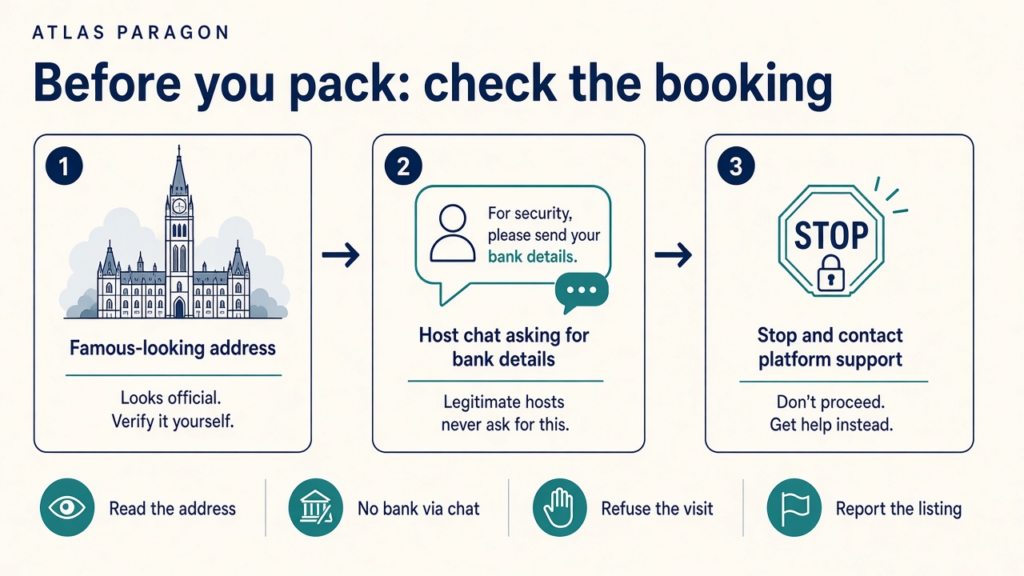
A booking can look like a bargain near a famous landmark and still be wrong. The listing photos may be real. The chat may use the platform’s own messaging tools. The address is the part that has to make sense before you send money, bank details, or your evening.
What Which? reported
Which? Travel reported on 25 September 2026 that criminals used Portcullis House, part of the House of Commons estate, as the address for a fake luxury flat listing on Booking.com under names such as “Apartments near Big Ben”. Armed security turned arriving guests away. A related listing used the address of a London Wetherspoons pub, marketed as “London Crown” apartments. Guests and pub staff reported stranded travellers turning up with nowhere to stay.
Which? says Booking.com told some customers they had to visit the fake address and try to check in before a refund or alternative would be considered. Reviews quoted in the report include people who drove long distances, including one family that spent the night in a car. Another listing still showed Preferred Plus promotional language while guests were being mistreated, according to Which?.
Booking.com told Which? that both properties were legitimate Somerset holiday cottages whose accounts were taken over in a phishing attack, that bookings were suspended, and that affected customers were being supported. Which? also notes that angry reviews continued after that statement, and that it raised Online Safety Act concerns with Ofcom.
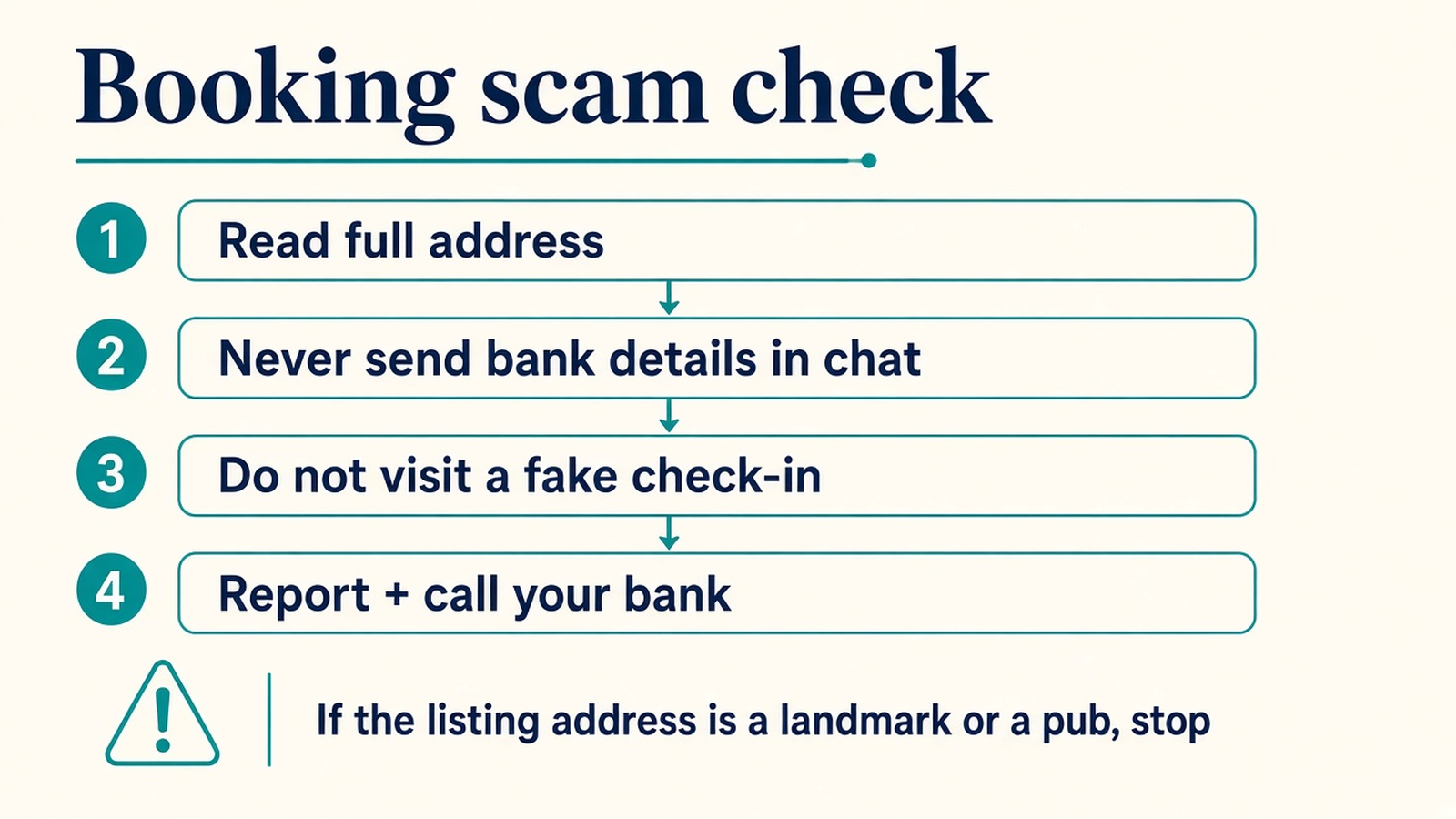
The household checks before you pay or travel
Read the full address, not only the headline and the photos. A flat that claims to sit inside a government building, a pub, or another landmark you cannot privately rent is not a bargain. Type the street address into a map you already trust and ask whether a holiday let can physically exist there.
Never send bank details, card numbers, or a payment link that arrives in host chat after you already booked on the platform. Which? describes guests who were asked for bank details soon after booking, with warnings that the stay would be lost if they refused. If the host pushes you off the platform’s normal payment flow, stop. The NCSC shopping guidance is blunt on the same idea for online payments: if something feels wrong, type the official site yourself and do not follow a pressure link.
Do not accept “show up and prove you cannot check in” as the price of a refund. If the address is already nonsense, contacting support with screenshots is enough. Travelling to a landmark or a pub at night does not make a fake listing real.
If money has already moved, call your bank first, then report the incident. In the UK, Action Fraud is the national reporting route for England, Wales and Northern Ireland; Scotland uses Police Scotland on 101. Keep the booking reference, chat screenshots, and the listing URL.
The one-minute check
- Read the whole address. If it is a landmark, a pub, or a building you cannot privately rent, stop.
- Refuse bank details or off-platform payment links in host chat.
- Do not travel to “prove” a fake check-in before support will help.
- If money moved, call the bank, then report it. Save the listing URL and chat.
Sources
- Which? Travel, Houses of Parliament used in new Booking.com investigation (25 Sep 2026)
- Action Fraud, report fraud in England, Wales and Northern Ireland
- NCSC, shopping and paying safely online