When another integration is technical debt, not progress

Another integration feels like progress because a diagram got a new arrow. The cost shows up later, when a field changes on one side and three other tools silently keep the old value. That is technical debt. The invoice for the connector was the small part.
Name the source of truth first
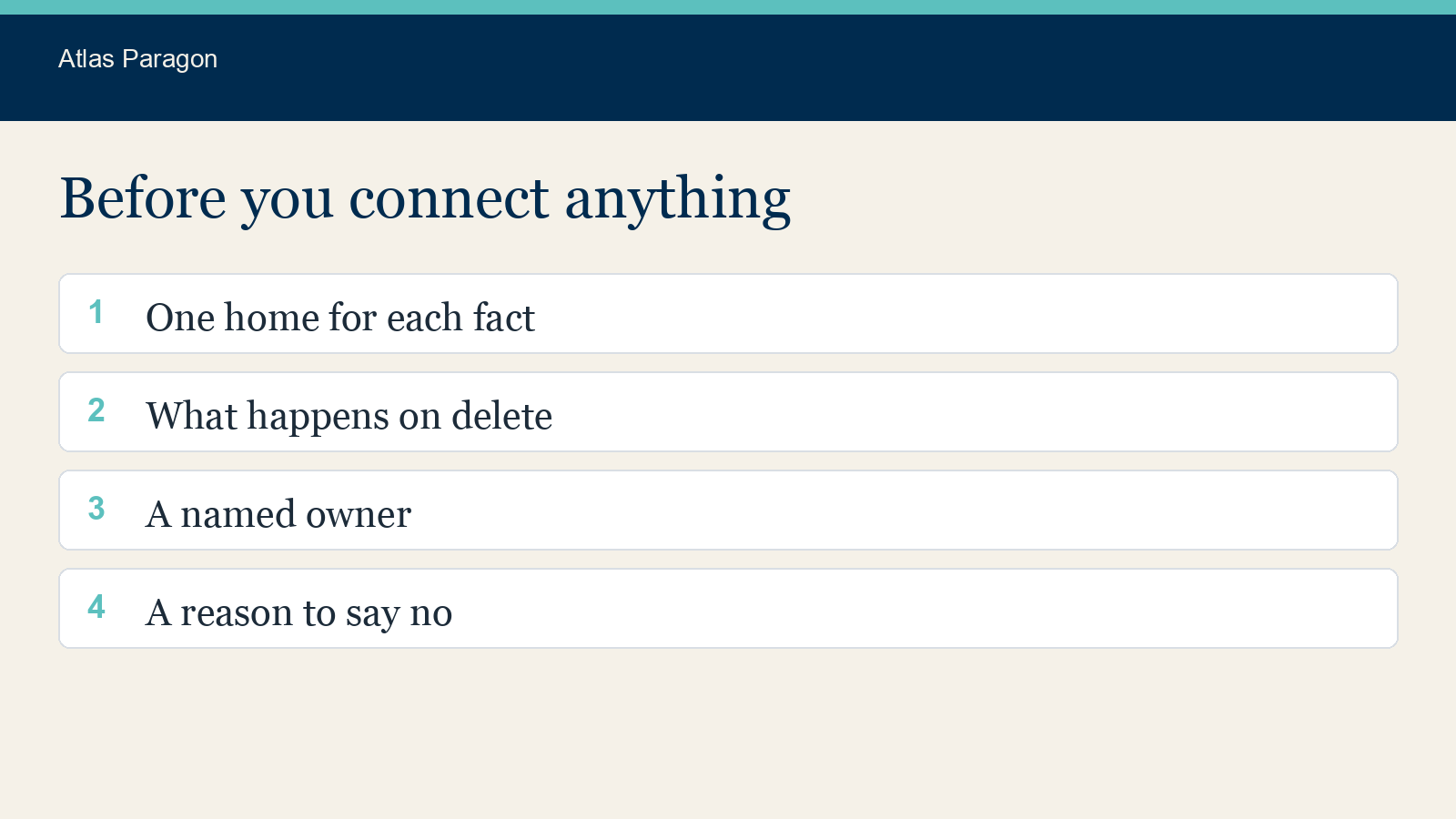
Every fact your company cares about should have one home. The customer address lives in one system. The invoice status lives in one system. An integration may copy a fact. It should not become a second place where people edit it. If two screens can change the same fact, you do not have an integration. You have a dispute waiting for a Monday morning.
Write the home down before you connect anything. One sentence: “Orders are created in X. Y may read them. Nobody edits an order in Y.” If you cannot write that sentence, you are not ready to buy the connector.
Ask what breaks, not what syncs
A demo shows a record appearing in the other tool. Ask the questions the demo skips. What happens when a record is deleted on the source side? What happens when a required field is blank? What happens when the same customer exists twice? Who is told, and how fast?
If the answer is “it depends” or “we can look into that”, you are about to own a manual repair job. Put a name on that job before you sign. An integration without an owner is a script that fails in the dark.
Keep the surface small
Connect the fields you use, not the fields the vendor can export. Every extra field is something you must explain when it changes, and something that may be personal data. The NCSC guide for small organisations is the right level for a team without a security department: know which suppliers can see your data, and do not hand them more than the job needs.
If the tool stores personal data, the contract is a separate decision from the connector. The legal overhead of one more tool is set out in when to stop adding tools. Do not let a technical “it already syncs” skip that page.
A reason to say no
Say no when the integration exists to spare someone a weekly export they could do in ten minutes, and the connector needs a paid plan, a private app, and a person who understands both APIs. The weekly export is boring. It is also reversible. The connector is a dependency.
Review the list of live integrations once a quarter. If nobody has used a sync since the last review, switch it off and see who complains. Silence is permission to remove it.